
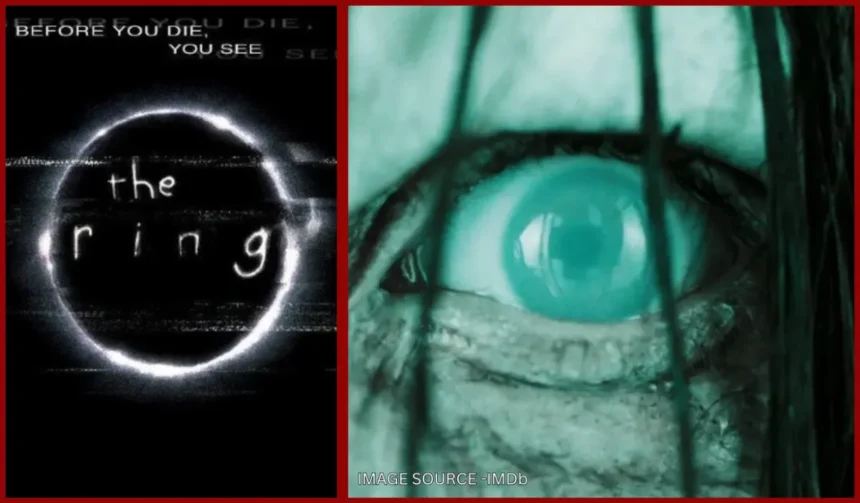
The Ring (2002) Explained: The Curse That Redefined Horror
A Deep Dive into the Modern Classic and Its Twisted Ending
🗓️ Release Year
2002
📺 Streaming On
Paramount+
IMDb
7.1/10
Rotten Tomatoes
71% Critic
77% Audience Score
Before The Ring arrived in 2002, American horror was largely dominated by self-aware slashers and teen screams. Then came a rain-soaked, grimly atmospheric nightmare from director Gore Verbinski that didn’t just startle you—it seeped into your bones. This wasn’t about a monster jumping out of a closet; it was about a curse delivered through the most mundane of objects: a VHS tape.
The film redefined supernatural horror for a new generation, trading gore for dread and leaving audiences with a chilling final twist that sparked endless debate. Two decades later, its central warning—“You will die in seven days”—still holds a terrifying power, proving that true fear lies not in what you see, but in what you’re forced to imagine.
A Viral Curse in the Analog Age
The Ring is an American adaptation of Hideo Nakata’s 1998 Japanese film Ringu, which was based on Koji Suzuki’s novel. The story follows Naomi Watts as Rachel Keller, a skeptical Seattle journalist who investigates the mysterious death of her niece. The link?
The teen and her friends all died exactly one week after watching a strange, avant-garde video tape. Rachel finds the tape, watches it herself, and receives a chilling phone call telling her she has just seven days to live.
What follows is a race against time as Rachel, with the help of her ex-boyfriend Noah (Martin Henderson) and her eerily intuitive son Aidan (David Dorfman), unravels the tragic origin of the tape’s creator: the vengeful spirit of Samara Morgan.
The film masterfully blends detective story with ghost story, creating a pervasive sense of unease that makes everyday technology feel threatening.
Story and Pacing: A Slow-Burn Descent into Dread
The genius of The Ring’s narrative is its procedural, almost investigative pace. This isn’t a film in a hurry. It takes its time, letting the mystery unfold clue by dreadful clue. The first act is a masterclass in building urban legend, with whispered rumors and sudden, unexplained deaths.
Once Rachel watches the tape—a surreal collage of disturbing, seemingly unrelated images—the film’s clock starts ticking, both for her and for the viewer. The pacing mirrors her growing desperation. Scenes in damp stables, on a foggy island, and in a lonely well are drawn out, steeped in a blue-grey color palette that makes the Pacific Northwest feel like another world.

The film’s scares are earned through atmosphere and implication rather than cheap jumps. The horror is in the waiting, in the countdown, and in the horrifying revelations about Samara’s tortured life. It’s a puzzle-box narrative where every piece fits into a larger picture of maternal neglect and supernatural rage.
Performances: Anchoring the Horror in Humanity
The cast delivers uniformly excellent, grounded performances that make the supernatural premise frighteningly believable.
Naomi Watts is the film’s brilliant anchor. Her Rachel is not a traditional horror heroine; she’s a determined, intelligent, and deeply flawed journalist whose maternal instincts clash with her professional curiosity. Watts portrays fear not with screaming, but with a quiet, widening of the eyes, a tremble in the hands, a gathering sense of cold dread. She makes us feel the weight of the week-long death sentence.
As Noah, Martin Henderson provides a necessary counterpoint of rational skepticism, which makes his eventual descent into terror all the more effective. The young David Dorfman is uncannily good as Aidan. He doesn’t play a cute kid; he plays an old soul, delivering cryptic lines with a stillness that is often more unsettling than the ghost itself.
And then there’s Daveigh Chase as Samara. Though her face is often obscured by wet black hair, her presence is unforgettable. The video tape is her performance—a terrifying broadcast of a tormented psyche. Her final, iconic crawl from the well and through the television screen is a feat of physical acting that burned itself into pop culture forever.

Direction and Visuals: The Aesthetics of Terror
Gore Verbinski, then known for comedies like Mouse Hunt, emerged as a visual stylist of the highest order with The Ring. His background in music videos is evident in the meticulously crafted, iconic imagery. The film looks and feels wet—from the constant rain to the damp hair, the mossy well, and the waterlogged corpse. This aqueous motif ties directly to Samara’s death and her association with wells and horses.
The cursed tape itself is a work of unsettling art. Its grainy, distorted images—the ring of light, the ladder, the crawling fingernails, the chair—are surreal and abstract, bypassing logic to tap directly into a primal sense of wrongness. Verbinski uses sound (or the lack thereof) masterfully. The silence before a scare, the distorted noises on the tape, the relentless ring of the telephone, and Hans Zimmer’s minimalist, pulse-like score all work to fray the nerves.
The visual effects, particularly Samara’s television emergence, were groundbreaking for their time. They used a mix of practical effects and clever editing to create a moment that feels physically impossible yet horrifyingly real, a testament to the “less is more” philosophy that the film champions.
The Ring Ending, Explained: The Twist That Changes Everything
Here is the core of the film’s lasting power: its devastating, rule-breaking ending. Rachel and Noah believe they have broken the curse by finding Samara’s bones and giving her a proper burial. There’s a moment of relief. Noah returns home, thinking he’s safe. Then, his television turns on.
Samara crawls out, not as a fuzzy specter, but in horrifyingly clear, high-definition reality. She advances, and the screen glitches to a static-filled shot of Noah’s corpse, his face frozen in a rictus of terror.
Rachel realizes the horrifying truth: You don’t break the curse by burying Samara. You break it by making a copy of the tape and showing it to someone else. The curse is a virus, and survival requires you to become a carrier, dooming another victim.
The film’s final shot is its most chilling. Rachel looks at her son, Aidan, and we understand her terrible choice. To save him from the tape he has now seen, she must make him an accomplice. She will help him make a copy. The cycle of trauma and vengeance doesn’t end; it simply gets passed on. The true horror isn’t Samara; it’s the monstrous choice survival demands.

Pros and Cons: A Critical Look
Pros:
- Unmatched Atmosphere: Creates a sense of dread that lingers long after the credits.
- Intelligent, Character-Driven Script: The horror stems from a compelling mystery and real characters.
- Iconic, Inventive Imagery: The tape, the well, and the TV crawl are eternally memorable.
- A Devastating, Thought-Provoking Ending: Elevates the film from a simple ghost story to a tragic parable.
- Naomi Watts’ Stellar Performance: She brings gravitas and relatable fear to the lead role.
Cons:
- Deliberately Slow Pace: May test the patience of viewers accustomed to faster-paced, action-oriented horror.
- Some Plot Logic Holes: The “rules” of the tape can feel ambiguous upon intense scrutiny (e.g., why a phone call?).
- The Early 2000s Aesthetic: The technology (VHS, CRTs) can date the film for younger viewers, though this also adds to its analog charm.
Cast
| Actor/Actress | Character | Note |
|---|---|---|
| Naomi Watts | Rachel Keller | The investigative journalist and protagonist. |
| Martin Henderson | Noah Clay | Rachel’s ex-boyfriend and Aidan’s father. |
| David Dorfman | Aidan Keller | Rachel’s perceptive and sensitive young son. |
| Daveigh Chase | Samara Morgan | The vengeful, supernatural antagonist. |
| Brian Cox | Richard Morgan | Samara’s adoptive father. |
| Jane Alexander | Dr. Grasnik | The veterinarian at the stable. |
| Lindsay Frost | Ruth Embry | Rachel’s sister and mother of the first victim. |
| Amber Tamblyn | Katie Embry | Rachel’s niece, the film’s first victim. |
Crew
| Role | Name | Other Notable Work |
|---|---|---|
| Director | Gore Verbinski | Pirates of the Caribbean trilogy, Rango |
| Screenplay | Ehren Kruger | The Ring Two, The Brothers Grimm |
| Based on Novel By | Koji Suzuki | Ringu, Loop |
| Based on Film By | Hideo Nakata | Ringu (1998), Dark Water |
| Cinematography | Bojan Bazelli | Mr. & Mrs. Smith, A Cure for Wellness |
| Music | Hans Zimmer | The Dark Knight, Inception, Dune |
| Producer | Walter F. Parkes, Laurie MacDonald | Gladiator, Men in Black series |
Who Should Watch This Movie?
- Fans of Psychological Horror: If you prefer dread over gore and stories that haunt your thoughts.
- Lovers of Atmospheric Film-making: Appreciators of mood, tone, and visual storytelling.
- Viewers Interested in Horror History: Anyone wanting to understand a pivotal film that sparked the J-horror remake trend.
- Those Who Appreciate a Killer Ending: If you love a film that saves its most devastating twist for the final moments.
Who Might Want to Skip: If you need fast-paced action, clear-cut monster rules, or a definitive, happy resolution, this slow-burn nightmare might frustrate you.
Verdict: A Stone-Cold Horror Classic
The Ring (2002) is not just a great horror movie; it is an essential one. It successfully transplanted the eerie sensibilities of Japanese horror to an American setting without losing its soul. Gore Verbinski crafted a film of exquisite, dripping tension, Naomi Watts gave a performance of raw, believable fear, and the ending delivered a philosophical gut-punch that few genre films ever achieve. It’s a film about the contagion of trauma, the price of survival, and the horror embedded in the everyday. While the VHS tape may be obsolete, the fear it represents—of cursed media, of inescapable fate, of the monster in the machine—is timeless.
Watching on Paramount+: The film is available to stream in high quality on Paramount+. The streaming service’s dark, quiet viewing environment is actually the perfect way to experience this film—preferably with the lights off and your phone far away. Just be prepared to view your own television with a little more suspicion once the credits roll.
Reviews & Rankings
| Source | Score / Rating | Key Comment |
|---|---|---|
| IMDb User Rating | 7.1/10 | “A chilling masterpiece that relies on atmosphere over gore.” |
| Rotten Tomatoes (Critics) | 71% | “Effectively creepy and visually arresting.” |
| Roger Ebert (Chicago Sun-Times) | 3/4 Stars | “A reminder of what horror can be when it’s done with style and intelligence.” |
| Empire Magazine | 4/5 Stars | “This is the horror event of the year. It will crawl under your skin and stay there.” |
| Common Sense Media | 4/5 Stars | “Intense, disturbing horror for mature teens and up.” |
| Our Verdict | 9/10 | A defining horror film of the 2000s whose power and iconic imagery have not diminished. |
Feeling brave enough to watch the tape? The curse begins the moment you press play. The Ring (2002) is streaming now on Paramount+. Just remember the rule: after you watch it, the only way to save yourself is to make someone else watch it. So, who will you show it to?
Frequently Asked Questions – The Ring (2002)
What is The Ring (2002) movie about?
The Ring (2002) is a supernatural horror movie about a cursed videotape that kills anyone who watches it after seven days.
Who is Samara in The Ring?
Samara Morgan is a powerful and vengeful spirit whose curse spreads through the videotape.
What happens at the end of The Ring?
The movie ends with the realization that Samara cannot be saved, and the curse must be passed on to survive.


