
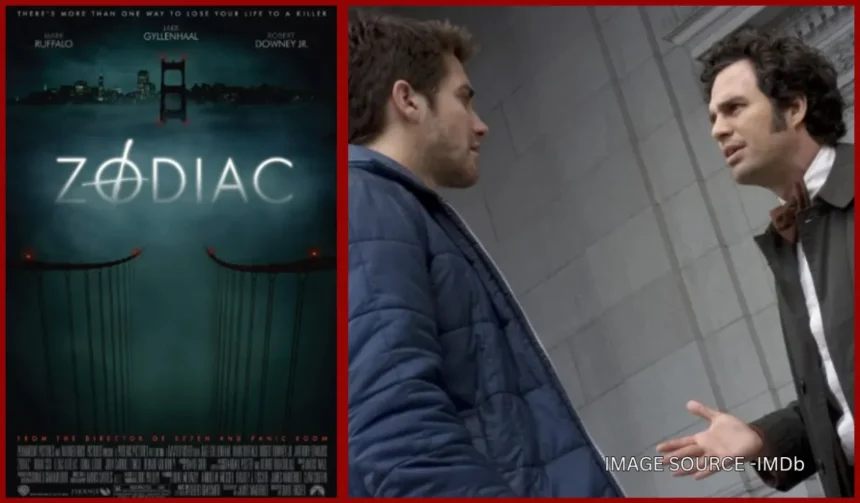
Zodiac (2007)
The Obsessive Hunt for a Shadow
🗓️ Release Year
2007
📺 Streaming On
IMDb
7.7/10
Rotten Tomatoes
90%
Critic Score
1. Zodiac (2007) Ending Explained: The Chilling Truth Behind the Film
Welcome to our comprehensive Zodiac Movie Explained and Ending Explained guide. David Fincher’s 2007 masterpiece is not a typical serial killer thriller. It is a meticulous, haunting procedural about obsession, uncertainty, and the erosion of life in pursuit of an answer.
This article will break down the film’s complex narrative, analyze its key themes, and deliver a definitive Zodiac ending explained analysis. We’ll explore why this film, based on the terrifying true story of the unsolved Zodiac murders, remains a landmark in true-crime cinema.
2. Overview
Zodiac is a historical crime drama and psychological thriller directed by David Fincher. With a runtime of 157 minutes (and 162 for the Director’s Cut), it meticulously chronicles the hunt for the Zodiac Killer in the late 1960s and 1970s.
The film’s mood is one of pervasive dread and bureaucratic frustration. It masterfully swaps visceral horror for the slow-burn anxiety of an unsolved puzzle. The OTT release on platforms like Netflix has introduced this complex film to a new generation of viewers.
3. Spoiler Warning
⚠️ SPOILER ALERT ⚠️
This article contains full spoilers for Zodiac (2007), including detailed plot points and the film’s conclusion. Proceed only if you’ve seen the movie or don’t mind spoilers.
4. Story Explained (Full Breakdown)
Act 1: The Murders Begin & The Ciphers
The film opens on July 4, 1969, with the first confirmed Zodiac attack. A young couple is shot at a lovers’ lane. This brutal, clinical scene sets the tone. The killer soon contacts Bay Area newspapers, sending cryptic ciphers and demanding publication.
We meet our three central figures: Cartoonist Robert Graysmith (Jake Gyllenhaal), Crime Reporter Paul Avery (Robert Downey Jr.), and Inspector Dave Toschi (Mark Ruffalo). The killer’s taunting letters and a solved cipher create public panic. The police are overwhelmed, and the media frenzy grows.
Act 2: The Investigation Expands & Suspects Emerge
The investigation becomes a maze of dead ends and false leads. Inspector Toschi works the official police angle, grappling with inter-departmental rivalries. Paul Avery thrives on the sensational story but begins to unravel under the pressure and a personal threat from Zodiac.
Robert Graysmith, a quiet cartoonist at the San Francisco Chronicle, becomes fascinated by the ciphers. His unofficial, obsessive investigation starts here. The film introduces key suspects like the intimidating Bob Vaughn and, most prominently, Arthur Leigh Allen. Allen matches physical descriptions, owns the same rare watch, and has a deeply disturbing demeanor.
Act 3: Obsession & The Cost of Truth
As years pass, the official case grows cold. Avery’s career declines due to addiction. Toschi is sidetracked. Only Graysmith continues, his obsession straining his marriage and consuming his life. He transitions from a bystander to the story’s primary detective.
The film’s climax is not an arrest, but a tense, private investigation. Graysmith confronts a man who may have known the killer, Rick Marshall, and later visits the reclusive Bob Vaughn in a terrifying basement scene. The puzzle pieces—handwriting, voice ID, and circumstantial evidence—increasingly point to Arthur Leigh Allen, yet conclusive proof remains elusive.

5. Key Themes Explained
Obsession vs. Resolution: The core theme is the human need for answers versus the cost of seeking them. Graysmith’s quest for a neat solution destroys his personal life, mirroring how the unsolved case poisoned the public’s sense of safety.
The Bureaucracy of Evil: Zodiac is less about a killer’s mind and more about the systemic failure to catch him. Fincher details the agonizing slowness of police work, lost evidence, and territorial disputes that allowed Zodiac to vanish.
The Death of the 60s: The film captures the end of the Californian summer of love. The murders inject a palpable, random evil into the era’s optimism, ushering in a more paranoid, cynical time.
Identity in the Information Age: Zodiac crafted his identity through media—letters, ciphers, and symbols. The film explores how truth becomes entangled with narrative, and how the hunt for a man becomes a decoding of his created persona.
6. Characters Explained
Robert Graysmith (Jake Gyllenhaal): A naïve puzzle-solver who believes in logical solutions. His arc is a descent from wide-eyed curiosity into monomania. His motive shifts from intellectual curiosity to a desperate need for closure, becoming a stand-in for the audience’s own frustration.
Paul Avery (Robert Downey Jr.): The charismatic, self-destructive journalist. He represents the initial media hysteria that eventually burns out. Zodiac’s personal threat to him shows the killer’s power to reach from the shadows and ruin lives without firing a shot.
Inspector Dave Toschi (Mark Ruffalo): The epitome of dedicated, procedural police work hamstrung by reality. His frustration is professional and ethical; he seeks justice but is bound by rules and a lack of evidence. His character adds the crucial layer of official investigation.
Arthur Leigh Allen (John Carroll Lynch): The prime suspect. Lynch’s performance is masterfully unsettling—a blend of childishness and menace. The film presents him as the most likely Zodiac, making the lack of forensic proof all the more maddening.

7. Twist Explained
Zodiac doesn’t have a traditional narrative twist. Its central, unsettling “twist” is the lack of one. The audience, conditioned by crime thrillers, waits for the smoking gun, the confession, the clear resolution.
The film subverts this by presenting its biggest suspect, Arthur Leigh Allen, and then systematically showing why he could never be convicted. The twist is the anti-twist: the real world is messy, evidence is lost, and monsters can remain faceless. The terrifying truth is not who did it, but that we might never truly know.
8. Movie Ending Explained
The Zodiac ending explained is crucial to understanding the entire film. Years after the murders, a worn-down Robert Graysmith visits Mike Mageau, the surviving victim of the first attack. Mageau confirms he was shown a photo of Arthur Leigh Allen by police and identified him as the shooter.
Graysmith then goes to the hardware store where Allen once worked. He gets a long, silent stare from the store clerk, who may have been Allen’s friend. The clerk’s gaze is heavy with unspoken knowledge. Graysmith leaves, looking back at the store.
In the final scene, Graysmith meets Inspector Toschi at a diner in 1991. Toschi confirms that while Allen was the prime suspect, physical evidence (fingerprints, handwriting, DNA from stamps) never matched. “I need to know it’s him,” Graysmith pleads. Toschi replies, “I know. I do, too.”
Graysmith looks out the window. The film cuts to a typewritten epilogue: Arthur Leigh Allen died in 1992. The case remains open.
What the Ending Means:
The ending is not about providing an answer. It’s about the psychological need for one. Graysmith and Toschi, representing the obsessive amateur and the bound professional, both feel Allen is guilty. The evidence circumstantially points to him. But feeling is not proof.
The final shot of Graysmith looking out the diner window is him facing the void of uncertainty. He has sacrificed his marriage and years of his life, and the closest he gets is a shared look of haunted suspicion with a retired cop. The Zodiac Killer won by never being conclusively identified, leaving a permanent scar of doubt.
Director’s Intention:
David Fincher is less interested in the killer and more in the corrosive impact of the unsolved mystery. The ending forces the audience to sit with the same unsatisfying, real-world conclusion that the investigators did. It’s a bold rejection of catharsis, making the horror existential rather than visceral.

9. Performances
Jake Gyllenhaal is phenomenal as Graysmith, portraying his transformation with subtle physicality. He shrinks from an eager boy into a gaunt, obsessed man, his eyes conveying a desperate need for order. It’s a quiet, anchoring performance.
Robert Downey Jr. brings tragic, chaotic energy as Paul Avery. He makes the character’s decline feel inevitable and deeply human. Mark Ruffalo offers a masterclass in understatement. His Toschi is all contained frustration and weary competence, a man doing a job he can never truly finish.
John Carroll Lynch deserves special mention. With minimal screen time, he creates an utterly chilling and memorable suspect. His calm, almost jovial demeanor during the police interview is more terrifying than any outburst.
10. Direction & Visuals
David Fincher’s direction is clinically precise, mirroring the film’s thematic focus on detail. The cinematography is often cool and desaturated, evoking the period and the case’s cold nature. The camera is static and observational, making sudden violence—like the lake stabbing—feel shockingly raw.
Fincher uses visual motifs like the enlarging newspaper headlines and the San Francisco cityscape, often shot under a flat, grey sky, to create a sense of sprawling, unsolvable mystery. The meticulous recreation of the 70s is not nostalgic; it feels like a detailed evidence board.
11. Pros and Cons
Pros:
- Unparalleled authenticity in its procedural detail.
- A trio of stellar, nuanced performances.
- A chilling, atmospheric tone that prioritizes dread over gore.
- A brave, intellectually honest ending that sticks to the facts.
- Masterful editing that manages a complex timeline with clarity.
Cons:
- Its deliberate, lengthy pace may test viewers seeking a conventional thriller.
- The large cast of secondary officers and suspects can be hard to track.
- The lack of traditional resolution will frustrate some audiences.
12. Cast
| Actor | Character | Role |
|---|---|---|
| Jake Gyllenhaal | Robert Graysmith | Chronicle cartoonist turned amateur investigator |
| Robert Downey Jr. | Paul Avery | Charismatic, self-destructive crime reporter |
| Mark Ruffalo | Inspector Dave Toschi | Lead SFPD homicide inspector on the case |
| Anthony Edwards | Inspector Bill Armstrong | Toschi’s partner |
| Brian Cox | Melvin Belli | Celebrity attorney contacted by Zodiac |
| John Carroll Lynch | Arthur Leigh Allen | The film’s primary suspect |
| Chloë Sevigny | Melanie Graysmith | Robert’s wife, strained by his obsession |
| Elias Koteas | Sergeant Jack Mulanax | Vallejo police sergeant |
13. Crew
| Role | Name | Notable Contribution |
|---|---|---|
| Director | David Fincher | Orchestrated the film’s meticulous tone and pacing |
| Screenwriter | James Vanderbilt | Adapted Graysmith’s books into a coherent narrative |
| Cinematographer | Harris Savides | Created the film’s stark, period-perfect visual palette |
| Editor | Angus Wall | Masterfully handled the complex, decade-spanning timeline |
| Composer | David Shire | Provided a score of subtle, unnerving tension |
14. Who Should Watch?
- Fans of true-crime and meticulous police procedurals.
- Viewers who appreciate character-driven drama over action.
- David Fincher aficionados interested in his style applied to historical fact.
- Anyone comfortable with ambiguous, thought-provoking endings.
It’s less suitable for those seeking a fast-paced, cathartic serial killer thriller with a clear resolution.
15. Verdict
Zodiac is a monumental achievement in true-crime filmmaking. It forgoes easy answers to deliver a haunting, immersive study of obsession and the elusive nature of truth. The ending explained not a mystery but the human cost of an unsolved one. Powered by exceptional performances and David Fincher’s flawless control, it’s a film that lingers in the mind like an unsolved cipher—frustrating, fascinating, and utterly unforgettable. This is a must-watch OTT experience for patient, thoughtful viewers.
16. Reviews & Rankings
| Source | Score | Verdict Snippet |
|---|---|---|
| IMDb | 7.7/10 | “A chilling and detailed procedural masterpiece.” |
| Rotten Tomatoes | 90% | “A taut, atmospheric, and suspenseful thriller.” |
| Roger Ebert | 4/4 | “One of the best films of the year. A police procedural, yes, but also a study in obsession.” |
| Metacritic | 78/100 | “Universal acclaim based on 40 critic reviews.” |
17. Where to Watch
Zodiac (2007) is currently available for streaming on Netflix in several regions. It is also available for digital rental/purchase on platforms like Amazon Prime Video, Apple TV, and Google Play.


