
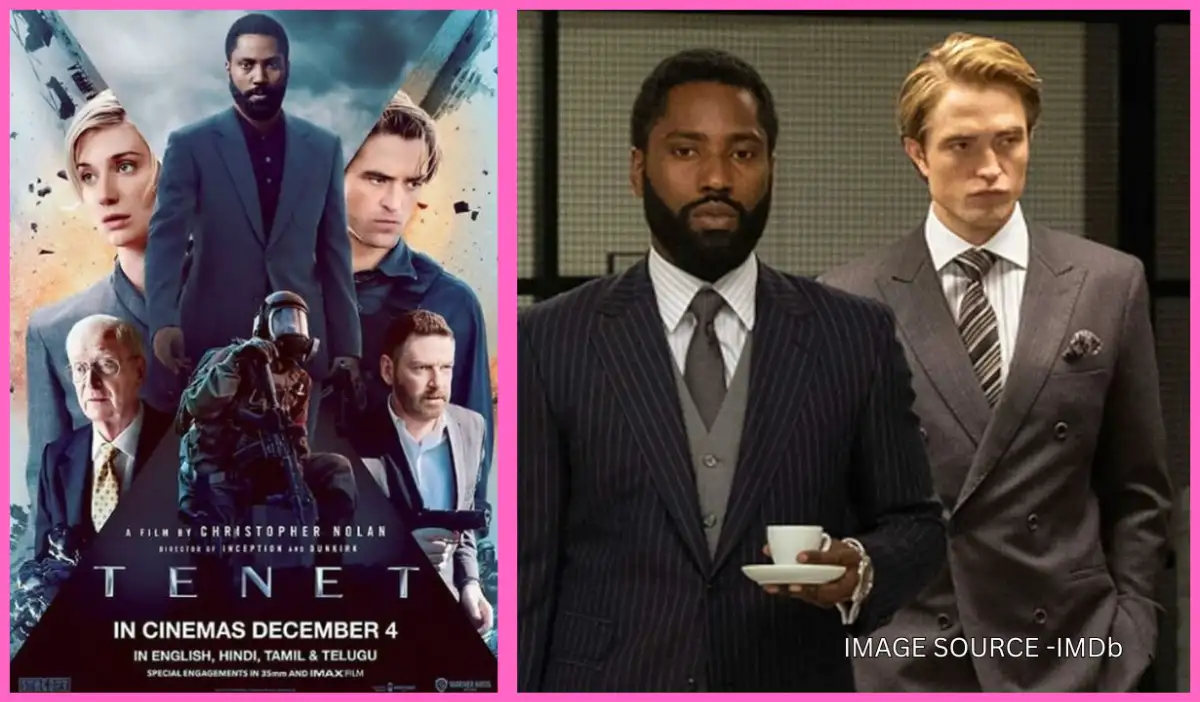
Tenet Explained: The Complete Story & Ending Breakdown
Unraveling Christopher Nolan’s Time-Bending Espionage Epic
🗓️ Release Year
2020
📺 Streaming On
IMDb
7.3/10
Rotten Tomatoes
69%
Welcome to our comprehensive Tenet Movie Explained and Ending Explained guide. Christopher Nolan’s 2020 sci-fi espionage thriller is a labyrinth of inverted time, global stakes, and philosophical paradoxes. It demands—and rewards—multiple viewings.
This article will serve as your navigator. We will break down the entire movie plot into digestible acts. We will explore its core themes, character motivations, and that stunning temporal pincer movement. Finally, we will dedicate a deep dive to the Tenet ending explained, clarifying its mysteries and emotional resolution. If the phrase “What’s happened’s happened” left you puzzled, you’re in the right place.
2. Overview
Tenet is a high-concept science fiction action film from visionary director Christopher Nolan. It blends the globetrotting scale of a Bond film with brain-twisting temporal mechanics that go beyond simple time travel. The mood is urgent, cool, and intellectually dense, with a relentless pace.
With a runtime of 150 minutes, it’s an immersive, challenging experience. The movie operates on a “need-to-know” basis, pulling the audience into the same disorienting reality as its protagonist. Its themes of fate, entropy, and sacrifice are wrapped in breathtaking practical set pieces.
3. SPOILER WARNING
This **Tenet Explained** article contains full spoilers for the entire **movie**, including major plot points, character revelations, and the ending. Proceed only if you’ve seen the film or don’t mind knowing everything.
4. Story Explained:
Act 1: Recruitment and The Inversion Concept
Our protagonist, simply called The Protagonist (John David Washington), survives a brutal CIA siege at a Kyiv opera house. He is tested with a cyanide pill, showing supreme loyalty. This recruits him into a shadowy organization named Tenet.
His handler, Fay, introduces him to the film’s central concept: “inversion.” Objects and people can have their entropy reversed, moving backwards through time from our perspective. The Protagonist’s mission is to prevent World War III, a temporal war started in the future. His first clue is inverted bullets.
He teams up with a local contact, Neil (Robert Pattinson), and they trace the inverted ammunition to an Indian arms dealer, Priya. She reveals the antagonist: Andrei Sator (Kenneth Branagh), a ruthless Russian oligarch from the future who can communicate with the past.
Act 2: Infiltrating Sator’s World
To get to Sator, The Protagonist must get close to his wife, Kat (Elizabeth Debicki). Sator controls her through a forged Goya painting and custody of their son. The Protagonist poses as an art appraiser to help Kat retrieve the painting, gaining her trust.
This leads to a dizzying sequence in Oslo’s Freeport, where The Protagonist fights a masked, inverted soldier in a turnstile—a device that reverses entropy. He later realizes he was fighting himself from a future, inverted timeline. The mission escalates to a daring heist of a plutonium core on a Tallinn highway.
The heist goes wrong. Sator captures Kat and the plutonium case (which is actually the Algorithm, a device that can invert the entire world’s entropy). In a stunning inverted car chase, Sator threatens to kill Kat unless The Protagonist gives him the Algorithm. The scene is shown from both forward and reversed perspectives, a masterclass in Nolan’s complex choreography.
Act 3: The Temporal Pincer Movement
Sator escapes to his hometown of Stalsk-12, a ruined Soviet city. He plans to die by suicide, triggering a dead man’s switch that will bury the Algorithm. Its activation would cause a “temporal grandfather paradox,” annihilating the past.
Tenet launches a two-pronged “temporal pincer movement.” Blue Team moves forward in time. Red Team, inverted, moves backward from the future, experiencing the battle in reverse. They fight to locate and secure the buried Algorithm. The Protagonist inverts and travels back to the day of the Tallinn chase to save Kat and ensure the Algorithm pieces are retrieved.
The final battle is a symphony of cause and effect seen from both temporal directions. Bullet holes appear in walls before shots are fired. Buildings “un-explode.” The Protagonist realizes Neil, his loyal friend, is from further in the future and has been working with him for years. Neil’s final act is to invert and sacrifice himself to unlock a door for the team, dying in the process.
5. Key Themes Explained
The Inevitability of Fate: The film’s mantra, “What’s happened’s happened,” isn’t nihilistic. It’s about accepting the fixed nature of the past to act freely in the present. Characters’ knowledge of the future doesn’t change events; it enables them to fulfill their roles. The paradox is that their free will is what creates the fixed timeline.
The Arrow of Entropy: Tenet uses entropy (the measure of disorder) as a weapon. Inversion reverses entropy, creating a visceral, backward reality. This isn’t just a sci-fi trick; it’s a philosophical exploration of time’s direction and the natural order of the universe.
Sacrifice and Friendship: Beneath the cerebral plot is a deeply emotional story about friendship and sacrifice. Neil’s relationship with The Protagonist is a closed loop of loyalty. His sacrifice is predetermined, yet chosen freely, giving the movie its heart.
The Cold War of Time: The conflict is a “temporal cold war” where the future attacks the past out of envy for a cleaner world. It’s a potent metaphor for generational conflict and environmental decay.
6. Characters Explained
The Protagonist (John David Washington): He is the audience’s anchor. A skilled operative thrown into an impossible reality, his journey is one of gradual understanding and acceptance. He evolves from a pawn to the master architect of the Tenet organization itself.
Neil (Robert Pattinson): The charismatic, knowledgeable guide. The Ending Explained section reveals he was recruited by The Protagonist in the future and sent back. His casual demeanor hides a tragic understanding of his predetermined fate. His backpack charm is the temporal marker of his sacrifice.
Kat (Elizabeth Debicki): The emotional core. Trapped in an abusive marriage with Sator, her arc is about reclaiming agency. Her final act of killing Sator is not just revenge; it’s her seizing control of her timeline and securing her son’s future.
Andrei Sator (Kenneth Branagh): A chilling villain motivated by terminal cancer and a bitter hatred for the world. As a conduit for the future, he represents nihilistic destruction. He wants to take everyone with him when he dies, a ultimate act of temporal terrorism.
Priya (Dimple Kapadia): The strategic leader of Tenet in the present. She represents the organization’s cold, operational side, willing to eliminate loose ends (like Kat) to protect the mission.

7. Twist Explained
The central twist of Tenet is not a single event but a recursive understanding of relationships.
Neil is The Protagonist’s Future Friend: The biggest emotional twist is that Neil and The Protagonist have a friendship that, from Neil’s perspective, spans years and moves backward. Neil’s “we have a friendship in the future” line takes on profound meaning. He already knows how their story ends.
The Protagonist is the Founder: The film’s closing moments reveal that The Protagonist is the unnamed mastermind who will eventually found the Tenet organization. He is both the beginning and the end of the temporal loop, recruiting Neil and setting the entire plot in motion. The opera siege was a test he designed.
Kat’s Savior Was Herself: During the final yacht scene, Kat sees a woman diving off a boat. She is seeing her future self, who has been inverted and placed there by The Protagonist to give her an alibi for killing Sator. It’s a perfect closed loop.
8. Movie Ending Explained
The Tenet ending explained brings the film’s emotional and philosophical threads together.
What Happens: After the Stalsk-12 battle, The Protagonist returns to the present timeline. He confronts Priya to stop her from assassinating Kat, now free from Sator. He kills Priya to protect Kat and her son. In the final scene, The Protagonist meets Neil in Mumbai. Neil reveals he must now invert and go back to Stalsk-12 to die, unlocking the door for the team—a fate he accepts. As Neil leaves, The Protagonist notices the red string backpack charm, realizing this was the friend who saved his life. The film ends with The Protagonist stating, “We have a job to do. Saving the world.”
What the Ending Means: The ending solidifies the film’s theme of “what’s happened’s happened.” Neil’s death is a fixed point, a tragic but necessary piece of the puzzle. His sacrifice is not changed by foreknowledge; it’s made meaningful by it. The Protagonist’s realization that he will recruit Neil and build Tenet completes his character arc from operative to architect.
Connection to Theme: The ending is a poignant meditation on determinism and free will. Neil chooses to walk to his death because he believes in the cause and his friendship with The Protagonist. His will is not constrained by fate; his will defines that fate. Similarly, The Protagonist chooses to embrace his future role, closing the loop out of duty.
Alternate Interpretation: Some view the ending as a bootstrap paradox with no true origin. Did Tenet always exist? Who really invented inversion? The film suggests these questions are less important than the characters’ choices within the loop. The mission’s success is its own origin.
Director’s Intention: Christopher Nolan crafts an ending that is intellectually satisfying and emotionally resonant. It prioritizes the bittersweet bond between the two lead characters over neat exposition. The focus is on the human cost of saving reality—a cost paid willingly.
9. Performances
John David Washington carries the film with a compelling blend of physicality and weary determination. He sells the confusion and gradual mastery of the complex rules, grounding the high concept.
Robert Pattinson is the film’s secret weapon. His performance as Neil is layered with a wry humor and deep, unspoken sadness. He makes the character’s profound loyalty and tragic destiny feel authentic and moving.
Elizabeth Debicki delivers a powerful performance, transforming Kat from a terrified hostage to a decisive force of vengeance. Her height and presence are used effectively to convey both vulnerability and immense strength.
Kenneth Branagh is menacing as Sator, blending Cold War-era villainy with a deeply personal rage. His Russian accent and sheer brutality make him a formidable and hateful antagonist.
10. Direction & Visuals
Christopher Nolan, as director, commits fully to practical effects. The crashing of a real Boeing 747, the backwards-and-forwards fight choreography, and the temporal pincer battle are staggering achievements. Cinematographer Hoyte van Hoytema uses IMAX film to create sweeping, immersive visuals.
The color palette is often cool and metallic, with bursts of color used for clarity (e.g., blue/red for teams). The sound design, while famously dense, is an intentional tool to disorient and immerse. The score by Ludwig Göransson replaces a traditional melody with a pounding, propulsive heartbeat that drives the relentless pace.

11. Pros and Cons
Pros:
- Unprecedented and ambitious conceptual filmmaking.
- Stunning practical action sequences and visuals.
- Intelligent, puzzle-box structure that rewards engagement.
- Strong central performances, particularly from Pattinson and Debicki.
- A genuinely emotional core beneath the complex sci-fi.
Cons:
- Expository dialogue can be overwhelming and hard to hear.
- The emotional connection is sometimes secondary to plot mechanics.
- Requires significant mental effort and multiple viewings to fully grasp.
- The Protagonist can feel like a cypher compared to the more colorful supporting cast.
12. Cast
| Actor/Actress | Character | Role Description |
|---|---|---|
| John David Washington | The Protagonist | The lead operative who becomes the architect of Tenet. |
| Robert Pattinson | Neil | The Protagonist’s guide and friend, operating from a reversed timeline. |
| Elizabeth Debicki | Kat | Andrei Sator’s abused wife, fighting for her and her son’s freedom. |
| Kenneth Branagh | Andrei Sator | The Russian oligarch and primary antagonist, communicating with the future. |
| Dimple Kapadia | Priya Singh | The Tenet handler in Mumbai, coordinating the mission. |
| Aaron Taylor-Johnson | Ives | The no-nonsense military leader of the temporal pincer assault. |
| Michael Caine | Sir Michael Crosby | A British intelligence liaison who provides early guidance. |
| Himesh Patel | Mahir | A Tenet ally who assists in logistics and the final battle. |
13. Crew
| Role | Name | Notable Contribution |
|---|---|---|
| Director / Writer | Christopher Nolan | Visionary filmmaker, crafted the original screenplay and complex temporal mechanics. |
| Cinematographer | Hoyte van Hoytema | Shot on IMAX 70mm and 65mm film, creating the film’s expansive visual scope. |
| Composer | Ludwig Göransson | Created the tense, non-linear score that drives the film’s rhythm. |
| Editor | Jennifer Lame | Pieced together the non-linear narrative and complex action sequences. |
| Producer | Emma Thomas | Longtime Nolan collaborator, oversaw the film’s massive production. |
14. Who Should Watch?
- Watch if you love: Christopher Nolan’s filmography, cerebral sci-fi, complex puzzles, James Bond-style espionage, and films that demand active participation.
- Avoid if you prefer: Straightforward narratives, character-driven dramas, or easily digestible action movies. This is a challenging, audio-visual assault on the senses.
15. Verdict
Tenet is Christopher Nolan’s most intellectually ambitious and narratively dense film to date. It is a spectacular, often baffling, cinematic experiment that places immense trust in its audience. While its cold exposition and sonic fury can be barriers, the movie offers immense rewards for those willing to engage with its labyrinth.
The core of Tenet is not its physics, but the tragic, beautiful friendship at its center. The Ending Explained reveals a story about fate, sacrifice, and the loops we choose to create out of love and duty. It’s a flawed, monumental work that only a filmmaker of Nolan’s stature could attempt.
16. Reviews & Rankings
| Source | Score | Key Comment |
|---|---|---|
| IMDb | 7.3/10 | “A mind-bending experience that demands multiple viewings.” |
| Rotten Tomatoes | 69% | “A visually dazzling puzzle for film lovers to unlock.” |
| Metacritic | 69/100 | “Mixed or average reviews based on 55 critic reviews.” |
| Common Sense Media | 4/5 | “Complex sci-fi spy thriller is brilliant but violent, confusing.” |
17. Where to Watch
Tenet is currently available for streaming on Netflix in many regions. It is also available for digital rental/purchase on platforms like Amazon Prime Video, Apple TV, and Google Play Movies.


