
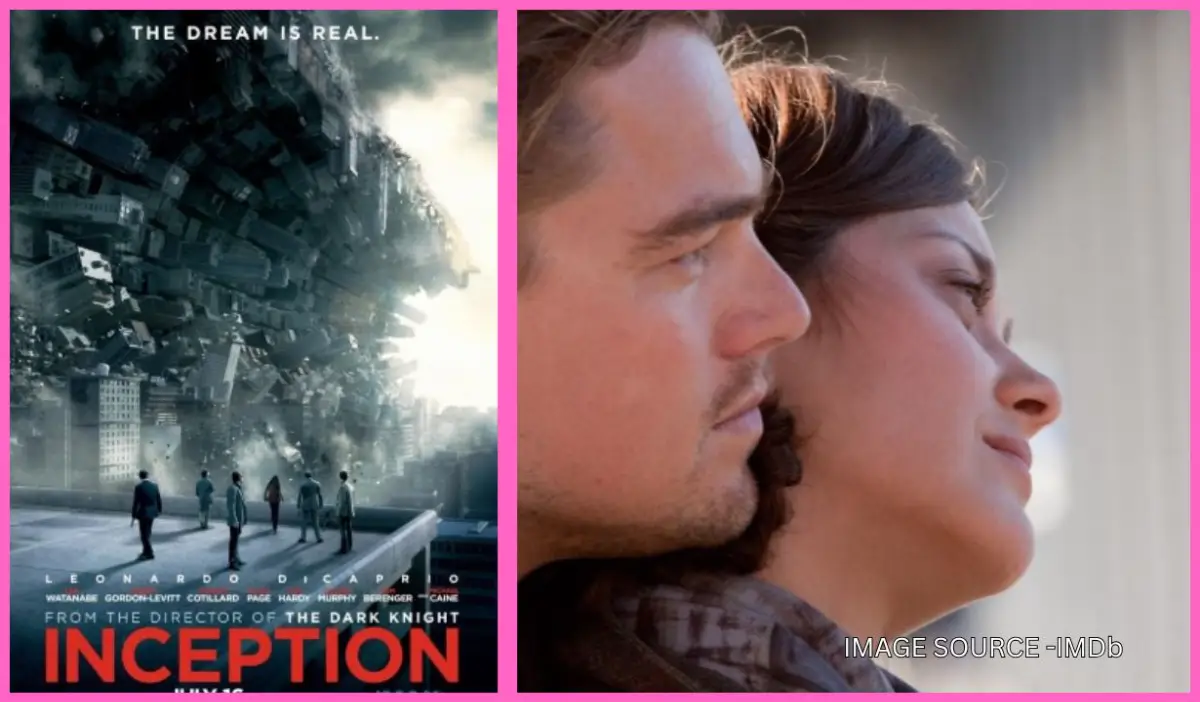
Inception Explained & Ending Explained
Dream Within a Dream: The Definitive Breakdown
🗓️ Release Year
2010
📺 Streaming On
IMDb
8.8/10
Rotten Tomatoes
87% (Critics)
91% Audience Score
Inception Ending Explained: Did The Top Fall? Breaking Down Cobb’s Final Choice
Christopher Nolan’s Inception is more than a science fiction heist film. It is a cinematic labyrinth that explores the architecture of the human subconscious. This movie explained guide will navigate its complex layers, from the rules of dream-sharing to the emotional core of Cobb’s guilt. More importantly, we will dedicate a significant portion to the Inception ending explained, dissecting that final, spinning top and what it truly means for Dom Cobb. Whether you’re watching for the first time on Netflix or revisiting this modern classic, this analysis will provide clarity and depth.
Overview
Inception (2010) is a cerebral sci-fi thriller that blends high-concept ideas with blockbuster action. The mood is one of paranoia, yearning, and existential dread, wrapped in the sleek packaging of a globe-trotting espionage mission. With a runtime of 148 minutes, the film demands your attention. It masterfully juggles multiple timelines and dream layers, all while asking profound questions about reality, memory, and redemption. The direction by Christopher Nolan is precise and ambitious, creating a world where the laws of physics are mere suggestions.
⚠️ SPOILER WARNING
This article contains full spoilers for Inception, including a detailed breakdown of the plot, key twists, and the ending. Proceed only if you’ve seen the film or wish to understand its mysteries.
Story Explained
Act 1 Explained: The Extract and The Offer
Dom Cobb (Leonardo DiCaprio) is an “extractor,” a thief who enters people’s dreams to steal secrets. A failed extraction from powerful businessman Saito (Ken Watanabe) leads to a unique proposition. Instead of an extraction, Saito wants Cobb to perform “inception”: planting an idea so deep in a target’s subconscious that they believe it’s their own.
The target is Robert Fischer (Cillian Murphy), heir to a vast energy empire. Saito wants Fischer to dismantle his father’s company. In exchange, Saito promises to use his influence to clear Cobb’s murder charge, allowing him to return to the U.S. and his children. Cobb assembles a team: architect Ariadne (Ellen Page), forger Eames (Tom Hardy), chemist Yusuf (Dileep Rao), and point man Arthur (Joseph Gordon-Levitt).
Act 2 Explained: The Dream Layers and The Heist
The plan involves diving into three nested dream levels, with a “kick” synchronized across each layer to wake the team up. The mission is complicated by Cobb’s subconscious projections of his deceased wife, Mal (Marion Cotillard), who sabotages the plans.
- Level 1 (The City): A rainy, urban environment. The team kidnaps Fischer, but his subconscious militarized projections attack. Saito is mortally wounded.
- Level 2 (The Hotel): Eames impersonates Fischer’s godfather to suggest his father wanted him to be his own man. They convince Fischer to go deeper to uncover the “truth.”
- Level 3 (The Snow Fortress): The team assaults a mountain fortress to plant the inception idea in Fischer’s mind: “My father doesn’t want me to be him… he wants me to be myself.”
Cobb reveals a secret fourth level: Limbo. It’s an unconstructed dream space of raw, infinite subconscious. They must go there to retrieve Saito, who died in Level 1 and is lost there, and to finally confront Mal.
Act 3 Explained: Confrontation and The Kick
In Limbo, Cobb finds both a young Saito and the manifestation of Mal he built over decades. He finally accepts his guilt: he performed inception on Mal, planting the idea that her world wasn’t real, which led to her suicide in the real world. He lets her go.
The synchronized kicks happen across the layers. Fischer accepts the planted idea. The team awakens on the plane, mission accomplished. Saito makes a call, clearing Cobb’s name.

Key Themes Explained
At its heart, Inception is about guilt and the stories we tell ourselves. Cobb’s entire journey is a metaphor for processing trauma. His “haunting” by Mal isn’t supernatural; it’s the persistent intrusion of unresolved grief and self-blame into his waking (and dreaming) life.
The film questions the nature of reality. If an idea feels real and has real consequences, does its origin matter? Cobb’s struggle isn’t just to get home, but to choose a reality where he can be at peace, even if it’s constructed.
It’s also about creation vs. destruction. Ariadne, the architect, builds labyrinths to navigate. Cobb, the extractor, tears them apart. The mission requires both: to dismantle Fischer’s inherited world to create a new, better one for him.
Characters Explained
- Dom Cobb (Leonardo DiCaprio): A genius crippled by guilt. His totem (the spinning top) is a flawed gauge of reality because his true anchor—his children’s faces—is a memory he’s corrupted. His arc is about forgiving himself.
- Mal (Marion Cotillard): Not a villain, but a tragic consequence. She represents the danger of losing the distinction between dream and reality, and the destructive power of a single, deeply planted idea.
- Ariadne (Ellen Page): The audience surrogate. She learns the rules and becomes Cobb’s moral compass and guide, literally and figuratively leading him out of his maze of guilt.
- Arthur (Joseph Gordon-Levitt) & Eames (Tom Hardy): Professional opposites. Arthur is meticulous and rule-bound; Eames is improvisational and fluid. They represent two necessary approaches to navigating chaos.
- Saito (Ken Watanabe): Starts as a client, ends as a savior. His journey from powerful businessman to a lost, aged man in Limbo underscores the film’s theme: in the subconscious, we are all vulnerable and searching for a way back.
Twist Explained
The central twist is not a last-minute reveal, but a gradual unpacking of Cobb’s backstory. We learn Cobb didn’t just lose his wife. He caused her death by performing inception on her. He planted the idea, “This world is not real,” in her mind so she would wake up with him. The tragic irony is that she carried that idea into the “real” world, believing it was still a dream.
This recontextualizes the entire movie. The mission to plant an idea in Fischer is a direct parallel to Cobb’s crime against Mal. It forces Cobb to relive his trauma and, ultimately, to resolve it by choosing differently this time.
Movie Ending Explained
The ending of Inception is one of the most debated in modern cinema. Cobb returns home, spins his totem on the table, and is finally reunited with his children. As he goes to hug them, he ignores the spinning top. It wobbles—and the screen cuts to black before we see it fall.
What does this mean?
The film’s genius is that it provides evidence for both interpretations, making the audience experience Cobb’s dilemma.
Interpretation 1: He’s Still Dreaming.
The clues are there. His children, James and Phillipa, are wearing the same clothes and are the same apparent age as in his memories and dreams. Michael Caine’s character, Professor Miles, earlier stated that he was “not available” in the dream world, but his presence at the end could be a projection. The top spins too perfectly and for too long. The final shot is a cliffhanger, leaving us in suspense, much like Cobb lives in suspense.
Interpretation 2: He’s in Reality.
The emotional resolution is the key. Cobb’s arc is about letting go of Mal and his guilt. He finally sees his children’s faces. He doesn’t care about the top anymore because he has found a new, more powerful totem: the tangible, emotional reality of his children in his arms. The top was Mal’s totem, not his, and it was always a flawed symbol of his obsession. By walking away, he chooses to believe in his reality, making it real for him. The cut to black is not a question, but a release.
Director’s Intention & Thematic Connection:
Christopher Nolan has been deliberately ambiguous, stating the ending is about Cobb’s choice, not the physics of the top. Thematically, the movie argues that our reality is defined by our subjective experience and choices, not by an objective test. Cobb chooses his children over the question. The Inception ending explained is not about solving a puzzle, but about understanding that Cobb has achieved catharsis. He is, finally, free.

Performances
Leonardo DiCaprio delivers a masterclass in restrained anguish. His performance is not in big outbursts, but in the weary tension of his shoulders, the haunted look in his eyes as he recounts Mal’s story. He makes Cobb’s intellectual genius and emotional brokenness feel inseparable.
Marion Cotillard is magnetic and terrifying as Mal. She imbues a phantom with profound sadness and lethal conviction, making her both the victim and the antagonist of Cobb’s story.
The supporting cast is exceptional. Joseph Gordon-Levitt brings a cool, physical precision to Arthur. Tom Hardy steals scenes with Eames’ wit and charm, providing crucial levity. Ellen Page grounds the film with Ariadne’s intelligent empathy and curiosity.
Direction & Visuals
Christopher Nolan’s direction is architectural. He constructs the film like a maze, with every shot serving the dual purpose of advancing the plot and reinforcing a theme. The bending Paris streets, the zero-gravity hotel fight, the crumbling Limbo city—all are visual representations of subconscious chaos being shaped by a conscious mind.
Cinematographer Wally Pfister uses a color palette that descends into gloom. The real world is often grey and stark. The dreams become more surreal and monochromatic as they go deeper (rainy city, warm hotel, blue-tinted fortress). Limbo is all washed-out, ancient decay.
The practical effects are staggering. The rotating hotel corridor fight was achieved with a giant, spinning set. This commitment to tactile realism makes the dream worlds feel unnervingly possible.
Pros and Cons
Pros:
- A brilliantly original, high-concept plot executed with blockbuster precision.
- Stunning, iconic visuals and practical effects that have aged beautifully.
- A powerful emotional core about guilt and redemption that anchors the cerebral plot.
- A masterful ensemble cast with no weak links.
- A thought-provoking, endlessly discussable ending.
Cons:
- The complex exposition can feel dense and lecture-like at times (e.g., the lengthy explanation of dream mechanics).
- Some characters, like Yusuf, are underdeveloped and purely functional to the plot.
- The emotional weight rests heavily on the Cobb-Mal relationship, which some viewers find less engaging than the heist mechanics.

Cast
| Actor/Actress | Character | Role Description |
|---|---|---|
| Leonardo DiCaprio | Dom Cobb | Extractor haunted by his past. |
| Joseph Gordon-Levitt | Arthur | Cobb’s meticulous point man. |
| Ellen Page | Ariadne | The intuitive dream architect. |
| Tom Hardy | Eames | The charming identity forger. |
| Ken Watanabe | Saito | The powerful businessman who hires Cobb. |
| Dileep Rao | Yusuf | The chemist who creates the powerful sedative. |
| Cillian Murphy | Robert Fischer | The heir who is the target of inception. |
| Marion Cotillard | Mal | Cobb’s deceased wife, who manifests in dreams. |
| Michael Caine | Professor Miles | Cobb’s father-in-law and mentor. |
Crew
| Role | Name | Notable Contribution |
|---|---|---|
| Director / Writer | Christopher Nolan | Conceived the original story and screenplay. |
| Cinematographer | Wally Pfister | Created the film’s distinct visual layers and palette. |
| Composer | Hans Zimmer | Scored the iconic, thunderous dream themes. |
| Editor | Lee Smith | Seamlessly wove together multiple timelines and layers. |
| Production Designer | Guy Hendrix Dyas | Designed the film’s incredible dream architecture. |
Who Should Watch?
- Fans of cerebral, puzzle-box science fiction.
- Viewers who enjoy heist films with a unique twist.
- Anyone who appreciates ambitious, large-scale filmmaking with a strong emotional core.
- Not ideal for those seeking a simple, passive viewing experience.
Verdict
Inception is a monumental achievement in filmmaking. It is a rare blockbuster that challenges the intellect while gripping the senses and touching the heart. Christopher Nolan crafted a timeless exploration of memory and idea that is as thrilling in its action as it is profound in its questions. The journey and the ending explained not a plot hole, but the entire point. It’s a film that demands—and rewards—multiple viewings, especially on a platform like Netflix where you can pause and ponder its depths.
Reviews & Rankings
| Source | Score | Verdict Snippet |
|---|---|---|
| IMDb User Score | 8.8/10 | “A masterpiece of modern cinema.” |
| Rotten Tomatoes (Critics) | 87% | “Smart, innovative, and thrilling.” |
| Rotten Tomatoes (Audience) | 91% | “Mind-blowing and emotionally resonant.” |
| Metacritic | 74/100 | “Generally favorable reviews.” |
| Common Sense Media | 4/5 | “Complex sci-fi thriller for mature teens and up.” |
Where to Watch
Inception is available for streaming on Netflix. You can also rent or purchase it on major digital platforms like Amazon Prime Video, Apple TV, and Google Play.


