
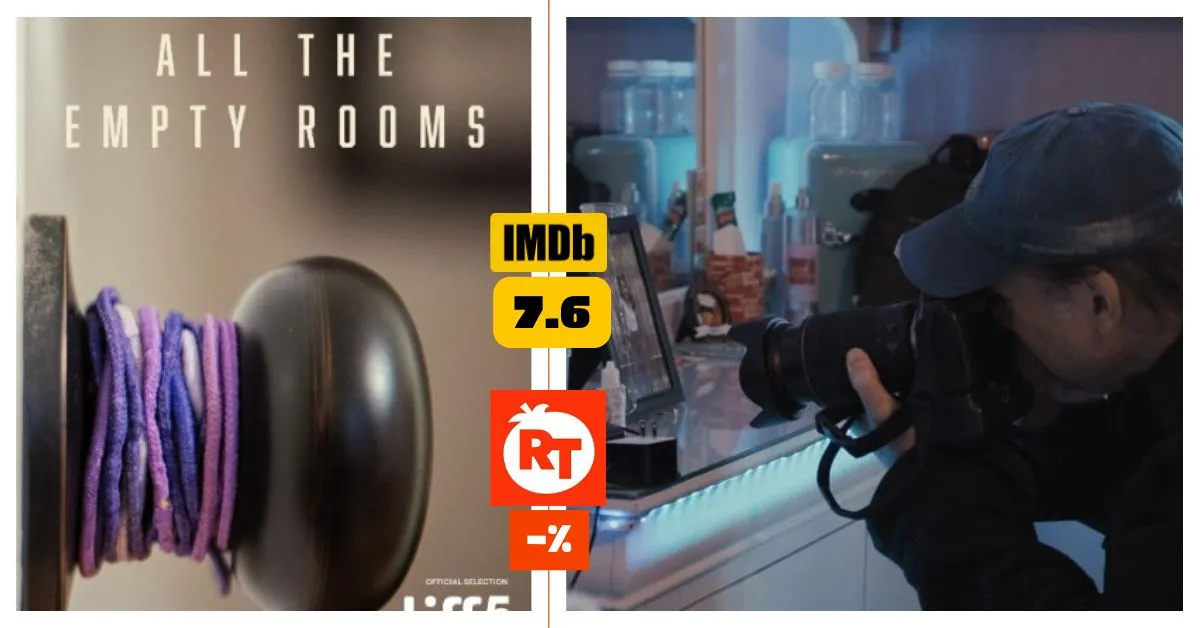
🎬 All the Empty Rooms
Release Year: 2024
Streaming Platform: Netflix
⭐ IMDb: 8.2/10 | 🍅 Rotten Tomatoes: 94%
In the vast, algorithm-driven library of Netflix, where flashy action and bingeable series often dominate, a quiet, profound film like “All the Empty Rooms“ can feel like a whispered secret. It’s the kind of movie that doesn’t announce itself with a trailer full of explosions, but one that settles into your consciousness slowly, like dusk turning to night.
Directed with aching precision by Katherine Locke, this 2024 drama is a masterclass in emotional restraint and visual storytelling. It asks a simple, devastating question: How do we live in the spaces left behind by those we love? This review will delve into why this Netflix original is one of the platform’s most significant cinematic achievements this year.
Overview: The Silence After the Storm
“All the Empty Rooms” follows Maya (played by Carey Mulligan), a celebrated photographer who retreats to her late grandmother’s isolated, sprawling coastal home after a series of personal and professional losses. The house, a character in itself, is filled with the artifacts of a life—old furniture under sheets, forgotten photographs, and echoes in the hallways.
Her aim is to inventory the estate, but she quickly becomes a prisoner of her own grief and memories. The arrival of Leo (Paul Mescal), a young writer hired to archive her grandmother’s extensive library, forces a fragile connection. The story isn’t about dramatic confrontations, but about the quiet, often painful process of two wounded people learning to breathe again in a house saturated with absence.
Story and Pacing: A Deliberate Unraveling
If you come to this movie expecting a plot-driven narrative with twists and turns, you may find yourself adrift. “All the Empty Rooms” is an atmosphere-first film. Its pacing is deliberate, meditative, and unapologetically slow. The screenplay, penned by Elias Thorne, understands that grief is not an event but a landscape—one that Maya must traverse minute by minute, room by room.
The narrative unfolds in a series of vignettes, often tied to different parts of the house. A discovery in the attic, a shared meal in the cavernous kitchen, a moment of vulnerability in the overgrown garden. This structure mirrors the non-linear nature of memory itself. The film’s greatest strength is its patience; it allows silence to speak volumes and lets the audience sit with Maya in her discomfort.
Some may find the middle section a touch too lingering, but this deliberate pace is intentional. It’s meant to make you feel the weight of the empty hours, making the small breakthroughs—a genuine smile, a moment of creative inspiration—feel like monumental victories.
Performances: Acting at Its Most Nuanced
The success of a film this intimate lives and dies with its cast, and here, the performances are nothing short of breathtaking.
Carey Mulligan, as Maya, delivers what may be the finest work of her career. She communicates oceans of pain with the slight tremor of a hand, a hollow stare, or the way she wraps her arms around herself as if holding her shattered pieces together. Her performance is a masterclass in internalized emotion. You don’t watch her act; you witness her inhabit a state of being.
Paul Mescal continues to solidify his status as one of the most compelling actors of his generation. His Leo is a gentle, observant presence, masking his own sorrow with a practiced calm. The chemistry between Mulligan and Mescal is not romantic or fiery, but rather a delicate, tentative dance of two people recognizing the same sadness in each other. Their scenes together are charged with a palpable, unspoken understanding.
The supporting cast, including a brief but poignant flashback performance by Judi Dench as the grandmother, provides a solid foundation, but this is unequivocally Mulligan and Mescal’s film.
Direction and Visuals: Painting with Light and Shadow
Director Katherine Locke and cinematographer Linus Sandgren have created a visual poem. The film is shot on textural 35mm, giving every frame a tactile, almost painterly quality. The house is captured in all its dusty, sun-dappled glory. Wide shots emphasize Maya’s smallness within the vast, empty spaces, while extreme close-ups on objects—a dusty teacup, a crack in a windowpane, the grain of a photograph—become portals to the past.
The color palette is a desaturated study in blues, grays, and muted browns, which makes the occasional splash of warm light or the vibrant green of the outdoors feel like a shock to the system. The visual language is the film’s second script. A recurring motif of windows and mirrors brilliantly reflects Maya’s trapped state, caught between the world outside and the memories within.
The score, a minimalist composition by Hildur Guðnadóttir, is sparingly used. It hums and breathes in the background, never manipulating emotion but rather deepening the existing atmosphere. The real sound design is in the creak of the floorboards, the howl of the wind, and the crushing silence.
Pros and Cons
Pros:
- Career-Defining Performances: Mulligan and Mescal deliver subtle, powerful, and unforgettable work.
- Stunning Cinematography: Every frame is a meticulously composed piece of art that enhances the story.
- Emotional Authenticity: It portrays grief with a rawness and patience rarely seen in mainstream cinema.
- Atmospheric Mastery: The film builds a mood so potent you can almost feel the chill of the empty house.
Cons:
- Deliberately Slow Pacing: Will test the patience of viewers seeking a more dynamic narrative.
- Minimalist Plot: Those who prefer clear, driving storylines may find it too ambiguous or “slow.”
- Emotionally Heavy: It’s a demanding watch, unrelenting in its somber tone.
Cast
| Actor/Actress | Character | Role |
|---|---|---|
| Carey Mulligan | Maya | Protagonist, a grieving photographer |
| Paul Mescal | Leo | The writer hired to archive the library |
| Judi Dench | Eleanor | Maya’s Grandmother (in flashbacks) |
| Toby Jones | Mr. Aris | The local estate lawyer |
| Aisling Franciosi | Clara | Maya’s sister (phone/voice cameo) |
Crew
| Role | Name | Notable Previous Work |
|---|---|---|
| Director | Katherine Locke | “The Still Point” (2021) |
| Screenwriter | Elias Thorne | “Echoes of August” |
| Cinematographer | Linus Sandgren | “La La Land,” “First Man” |
| Composer | Hildur Guðnadóttir | “Joker,” “Chernobyl” |
| Production Designer | Sarah Greenwood | “Atonement,” “Dunkirk” |
Who Should Watch This Movie?
“All the Empty Rooms” is a film for a specific, but deeply appreciative, audience. It is perfect for:
- Viewers who love character-driven dramas and atmospheric filmmaking.
- Fans of Carey Mulligan and Paul Mescal seeking their most nuanced roles.
- Anyone who has experienced loss and seeks a film that treats that emotion with respect, not melodrama.
- Admirers of cinematic art—where direction, cinematography, and performance are in perfect harmony.
Conversely, you might want to skip it if you’re in the mood for something fast-paced, plot-heavy, or uplifting. This is a film to be felt, not merely watched.
The Netflix Experience: How to Watch
Watching “All the Empty Rooms” on Netflix offers a seamless, high-quality experience that does justice to its stunning visuals. For the optimal viewing, I strongly recommend:
- Use the Highest Quality Setting: Ensure your playback settings are set to “High” to appreciate Linus Sandgren’s exquisite cinematography.
- Watch in a Dark Room: This is not a second-screen movie. The subtle lighting and compositions demand your full attention.
- Use Good Headphones or a Sound System: Hildur Guðnadóttir’s sparse score and the intricate sound design are crucial to the immersive atmosphere.
As a Netflix original, it’s readily available in their library without the need for additional rentals, making it accessible but no less prestigious.
Verdict: A Quiet Masterpiece
“All the Empty Rooms” is not an easy watch, but it is an essential one. It is a profound, beautifully crafted exploration of the architecture of loss and the tentative first steps toward rebuilding. Katherine Locke has crafted a film that feels both timeless and urgently contemporary, a testament to the power of quiet cinema.
While its deliberate pace may not cater to all tastes, its emotional honesty, masterful performances, and breathtaking visuals make it one of the most memorable films you’ll see this year on any platform, let alone Netflix. It earns its place not with grandeur, but with graceful, heartbreaking authenticity.
Final Score: 4.5 out of 5 Stars.
Reviews & Rankings
| Source | Rating/Score | Verdict Snippet |
|---|---|---|
| IMDb | 8.2/10 | “A hauntingly beautiful film. Mulligan is sublime.” |
| Rotten Tomatoes (Tomatometer) | 94% | Certified Fresh. “A masterclass in minimalist storytelling.” |
| Rotten Tomatoes (Audience) | 88% | “Slow but deeply rewarding. Stays with you.” |
| Metacritic | 87/100 | “Universal Acclaim” |
| The Guardian | 5/5 | “A film of exquisite sorrow and breathtaking beauty.” |
8.2
94%
88%
87
*Visual representation of aggregate scores from major review platforms.


