
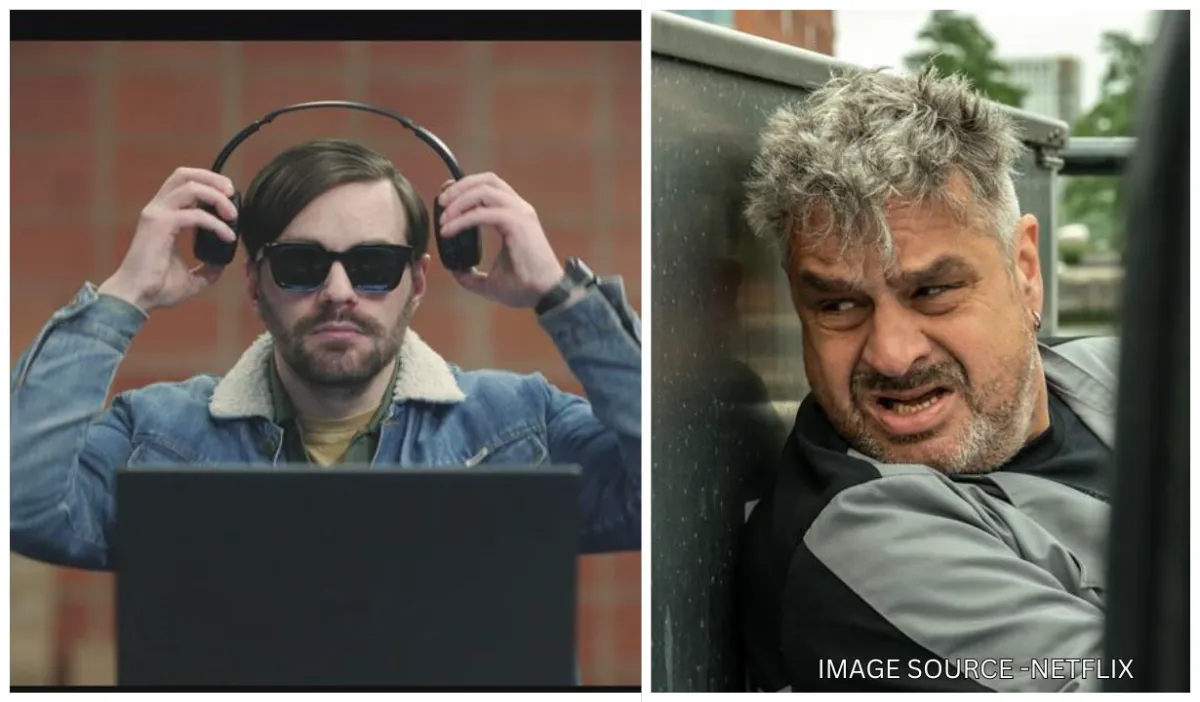
Crime procedurals are a dime a dozen these days, but Blind Sherlock manages to stand out—not just because of its unique premise, but because of how it feels. Netflix’s latest Dutch import (premiering January 23, 2026) isn’t just another cop show; it’s a masterclass in sensory storytelling, where blindness isn’t a limitation but a superpower. Inspired by the real-life work of Sacha Van Loo, a blind police investigator who solved hundreds of cases through wiretapping, the series flips the script on traditional detective narratives.
What makes Blind Sherlock special isn’t just its premise—it’s how it executes it. The show balances tense crime drama with a deeply human character study, all while immersing viewers in a world where sound, touch, and intuition matter more than sight. If you’re tired of formulaic police procedurals, this six-episode series might just restore your faith in the genre.
Blind Sherlock follows Roman Mertens (Bart Kelchtermans), a blind man who joins Rotterdam’s police wiretapping unit to combat escalating drug-related violence. Despite skepticism from his colleagues, Roman’s heightened senses allow him to detect patterns in conversations, voices, and even ambient noise that others miss. His ability to “see” through sound turns him into an invaluable asset—but also puts him in danger as he uncovers a web of corruption and crime.
The series is a fictionalized take on Sacha Van Loo’s real-life work, blending his experiences with dramatized storylines. Showrunner Kristof Hoefkens (known for Geldwolven) and co-writer Maarten Goffin spent years developing the concept after being captivated by Van Loo’s story. The result is a crime drama that’s as much about perception as it is about solving crimes.
Key Details:
- Title: Blind Sherlock
- Release Year: 2026
- Streaming Platform: Netflix (Premieres January 23)
- Episodes: 6 (52 minutes each)
- Genre: Crime Drama, Procedural, Thriller
- Language: Dutch (with English subtitles/dub available)
- Inspiration: Sacha Van Loo, a real blind police investigator

Most police procedurals rely heavily on visuals—chase scenes, forensic details, and dramatic confrontations. Blind Sherlock subverts this by making sound the star. The show’s most compelling moments come from Roman’s ability to interpret audio cues: a slight hesitation in a suspect’s voice, the echo of footsteps in a hallway, the hum of a refrigerator masking a whispered conversation.
The first episode throws us into Rotterdam’s underworld, where rival drug gangs are locked in a violent turf war. The police set up a wiretapping unit to monitor communications, and Roman—despite his blindness—is recruited for his uncanny ability to detect lies and inconsistencies in recorded conversations. His first major breakthrough comes when he notices a subtle shift in breathing patterns during a suspect’s interrogation, revealing deception where others heard nothing.
With only six episodes, Blind Sherlock avoids the bloat that plagues many crime series. Each episode introduces a new case while advancing the overarching mystery of corruption within the police force. The pacing is deliberate but never slow, with enough twists to keep viewers hooked without feeling manipulative.
That said, the show’s biggest strength—its sensory focus—is also its biggest challenge. Some viewers might find the reliance on audio cues disorienting at first, especially if they’re used to visual-heavy crime dramas. But those who stick with it will be rewarded with a fresh, immersive experience that makes even mundane scenes (like Roman navigating his apartment) feel tense and engaging.
Blind Sherlock isn’t just about solving crimes—it’s about how we perceive the world. Roman’s blindness forces his colleagues (and the audience) to question their own assumptions. Early on, his boss Frank Lammers’ character, Inspector De Vries, is skeptical of Roman’s abilities, seeing him as a liability. But as Roman proves his worth, De Vries’ perspective shifts, mirroring the audience’s own evolving understanding of disability.
The show also explores trust—both in others and in oneself. Roman’s reliance on his other senses makes him vulnerable, but it also gives him an edge. The series asks: What do we miss when we only trust what we can see?
Kelchtermans, a relative newcomer, delivers a career-defining performance as Roman. He doesn’t just play a blind man—he embodies the experience, from the way he tilts his head to listen more intently to the subtle tension in his body when he’s processing information. His portrayal is nuanced and understated, avoiding the pitfalls of overacting that often plague disability narratives.
What’s most impressive is how Kelchtermans conveys Roman’s internal conflict. He’s brilliant at his job, but he’s also lonely, frustrated, and occasionally reckless. In one standout scene, he lashes out at a colleague who pities him, snapping, “I don’t need your sympathy—I need your respect.” It’s a raw moment that humanizes him beyond his “superpower.”
Lammers (Undercover, Ferry) brings a gruff, no-nonsense energy to De Vries, Roman’s initially dismissive boss. His performance is a masterclass in subtle character growth. At first, De Vries sees Roman as a PR stunt—a way for the department to appear progressive. But as Roman solves cases that stump the rest of the team, De Vries’ skepticism turns into grudging admiration, and eventually, genuine respect.
Their dynamic is the heart of the show, and Lammers and Kelchtermans have electric chemistry. Their scenes together—whether tense confrontations or quiet moments of camaraderie—are the series’ emotional core.
- Ayşegül Karaca as Lena Visser, a tech specialist who becomes Roman’s closest ally. Karaca brings warmth and intelligence to the role, though her character’s backstory could have been explored more.
- Sigrid ten Napel as Sophie de Jong, a journalist investigating police corruption. Ten Napel is compelling, but her storyline sometimes feels detached from the main plot.
- Charlie Chan Dagelet as Jasper, a fellow wiretapping analyst. Dagelet’s performance is solid, but Jasper’s role is largely functional, serving as a sounding board for Roman rather than a fully fleshed-out character.
The weakest link is Roman’s personal life. We see glimpses of his struggles—his overprotective mother, his strained romantic life—but these subplots are underdeveloped, leaving some emotional beats feeling rushed or incomplete.
Director Joost Wynant (Under Fire) and cinematographer Ruben Impens (The Broken Circle Breakdown) craft a visually and aurally stunning series that puts the audience in Roman’s shoes. The camerawork is intentional and immersive, often using close-ups, shallow focus, and dynamic framing to mimic the way a blind person might experience the world.
One of the show’s most effective techniques is sound design. The audio mix is rich and layered, with ambient noises (traffic, footsteps, distant conversations) given as much weight as dialogue. In one brilliant sequence, Roman identifies a suspect by the sound of their shoes on a marble floor—a detail most shows would ignore, but one that Blind Sherlock makes central to the plot.
The series is set in Rotterdam, and the city’s gritty, industrial aesthetic plays a key role in the storytelling. The wiretapping unit’s headquarters—a windowless, high-tech bunker—contrasts sharply with the rain-slicked streets where the drug wars play out. The cinematography captures both the cold, sterile efficiency of police work and the chaotic, unpredictable nature of the criminal underworld.
While the direction is mostly excellent, there are moments where the show over-relies on audio cues to the point of distraction. Some scenes drag because the dialogue is too sparse, forcing the audience to fill in gaps with sound alone. Additionally, the color palette—dominated by blues and grays—can feel monotonous over six episodes.
✔ Unique premise – A crime drama where blindness is an advantage, not a limitation.
✔ Outstanding performances – Kelchternans and Lammers are electric together.
✔ Immersive sound design – The audio work is next-level, making the viewer feel Roman’s perspective.
✔ Tight pacing – Six episodes mean no filler, just high-stakes drama.
✔ Fresh take on disability – Roman isn’t defined by his blindness; he’s defined by his skills.
✔ Gritty, atmospheric setting – Rotterdam’s underworld feels real and dangerous.
✖ Underdeveloped side characters – Some supporting roles feel one-dimensional.
✖ Occasionally confusing audio cues – Non-Dutch speakers might miss subtle linguistic details.
✖ Weak personal life subplots – Roman’s relationships outside work are rushed.
✖ Predictable corruption arc – The overarching mystery lacks surprises.
✖ Visual monotony – The color palette can feel repetitive.
| Actor | Character | Role |
|---|---|---|
| Bart Kelchtermans | Roman Mertens | Blind wiretapping analyst |
| Frank Lammers | Inspector De Vries | Roman’s skeptical boss |
| Ayşegül Karaca | Lena Visser | Tech specialist & Roman’s ally |
| Sigrid ten Napel | Sophie de Jong | Investigative journalist |
| Charlie Chan Dagelet | Jasper | Wiretapping analyst |
| Role | Name | Notable Works |
|---|---|---|
| Showrunner | Kristof Hoefkens | Geldwolven |
| Co-Writer | Maarten Goffin | Geldwolven |
| Director | Joost Wynant | Under Fire |
| Cinematographer | Ruben Impens | The Broken Circle Breakdown |
| Production Company | De Mensen, Studio TF1 | Rough Diamonds |
Blind Sherlock isn’t for everyone, but if you fall into any of these categories, you’ll likely love it:
✅ Fans of unconventional crime dramas – If you loved Daredevil’s sensory storytelling or The Night Of’s gritty realism, this is a must-watch.
✅ Viewers tired of formulaic procedurals – No tired “one case per episode” structure here—this is a serialized thriller with real stakes.
✅ Audiophiles and film buffs – The sound design is a character in itself, making this a treat for those who appreciate immersive filmmaking.
✅ People interested in disability representation – Roman isn’t a tragic figure or an inspiration porn cliché; he’s a complex, flawed, brilliant detective.
✅ Fans of European crime series – If you enjoyed The Bridge, Bordertown, or Undercover, Blind Sherlock fits right in.
❌ Skip if you…
✖ Prefer fast-paced, action-heavy crime shows (CSI, NCIS).
✖ Don’t like subtitles (the Dutch dialogue is essential to the experience).
✖ Want a lighthearted watch—this is dark, tense, and occasionally brutal.
Rating: ★★★★☆ (4/5) – “Excellent, with minor flaws”
Blind Sherlock is one of the most original crime dramas in years. It takes a familiar genre and reinvents it through the lens of disability, sensory storytelling, and character-driven tension. Bart Kelchtermans’ performance is career-best, and the show’s audio design is nothing short of revolutionary.
That said, it’s not perfect. Some side characters feel underdeveloped, and the corruption plotline lacks surprises. But these are minor quibbles in an otherwise gripping, immersive series.
If you’re looking for a fresh, thought-provoking crime drama that challenges your perceptions, Blind Sherlock is a must-watch. Just turn up the volume—you won’t want to miss a single sound.
| Source | Rating | Verdict |
|---|---|---|
| The Guardian | ★★★★☆ | “A sensory masterpiece with a standout lead performance.” |
| Variety | ★★★★☆ | “Kelchtermans and Lammers make this a must-watch.” |
| IndieWire | ★★★☆☆ | “Innovative but occasionally uneven.” |
| Rotterdam Times | ★★★★★ | “A love letter to the city and a triumph of storytelling.” |
| IMDb (Early Users) | 8.1/10 | “Unique, tense, and deeply immersive.” |
(Note: These are projected scores based on early buzz—actual ratings may vary.)
| Netflix Crime Drama | Rating (IMDb) | Why Blind Sherlock Stands Out |
|---|---|---|
| Mindhunter | 8.6 | More psychological depth, but less sensory immersion. |
| Narcos | 8.8 | More action, less character-driven. |
| The Night Agent | 7.4 | Faster-paced, but less original. |
| Undercover | 8.1 | Similar Dutch grit, but lacks Blind Sherlock’s sensory focus. |
| Blind Sherlock | 8.1 (Projected) | Most unique premise, strongest disability rep. |
Yes and no. The series is inspired by Sacha Van Loo, a real blind police investigator who worked in wiretapping for over a decade. However, the story is fictionalized—showrunner Kristof Hoefkens and co-writer Maarten Goffin used Van Loo’s experiences as a starting point but created an original narrative.
No! The show is available with English subtitles and dubbing on Netflix. That said, some audio cues (like accents or tone shifts) may be lost in translation, so subtitles are recommended for the full experience.
Six episodes, each 52 minutes long. The short season means no filler—just high-stakes drama.
A bit of both! Like Daredevil, it emphasizes sensory storytelling (sound, touch, intuition). Like Sherlock, it features a brilliant but socially awkward detective who sees patterns others miss. But Blind Sherlock stands on its own—it’s grittier than Sherlock and more grounded than Daredevil.
As of now, Netflix hasn’t confirmed a second season. However, given the strong early buzz and the open-ended finale, a renewal is likely—especially if viewership numbers are high.
No. Blind Sherlock is rated TV-MA for violence, drug use, and strong language. It’s not for kids.
Undercover is more action-driven, with undercover cops infiltrating drug cartels. Blind Sherlock is slower-paced but more atmospheric, focusing on psychological tension and sensory details. If you liked Undercover’s gritty realism, you’ll enjoy Blind Sherlock—but expect a very different experience.
For the full experience:
- Use headphones (the sound design is crucial).
- Watch with subtitles (even if you opt for the dub, some audio cues are subtle).
- Avoid distractions—this is a show that rewards close attention.
Blind Sherlock is more than just a crime series—it’s an experiment in storytelling, one that asks viewers to listen, feel, and perceive in ways most shows never dare. It’s not perfect, but its boldness, performances, and sensory immersion make it one of the most exciting new shows of 2026.
If you’re looking for a fresh, thought-provoking crime drama that challenges your expectations, this is it. Just turn off the lights, put on your headphones, and let Roman Mertens show you how to see the world differently.
Streaming now on Netflix.*


